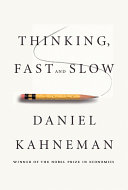
Daniel Kahneman introduces the concept of two systems of thinking: System 1 and System 2. System 1 is fast, automatic, and often unconscious, responsible for quick judgments and intuitive responses. It operates effortlessly and is influenced by emotions and heuristics. On the other hand, System 2 is slow, deliberate, and analytical. It requires effort and concentration, engaging in complex problem-solving and logical reasoning. The interplay between these two systems shapes our decisions, often leading to cognitive biases and errors. Kahneman illustrates how System 1 can lead to snap judgments that may not always be accurate, while System 2 can help us analyze situations more thoroughly but is often lazy and reluctant to engage unless necessary. Understanding these systems is crucial for recognizing the limitations of our thinking processes and making more informed decisions.
Continue readingKahneman delves into the various heuristics—mental shortcuts that simplify decision-making—that people use in their daily lives. While these heuristics can be useful, they also lead to systematic biases. For example, the availability heuristic causes individuals to judge the frequency or likelihood of events based on how easily examples come to mind, often skewing their perception of reality. The anchoring effect is another bias where individuals rely too heavily on the first piece of information encountered when making decisions. Kahneman’s exploration of these heuristics and biases highlights how they can distort our judgment and lead to poor decision-making in both personal and professional contexts. By recognizing these biases, individuals can strive to mitigate their effects and make better-informed choices.
Continue readingThe overconfidence effect refers to the tendency for people to overestimate their knowledge, abilities, and the accuracy of their predictions. Kahneman explains that this bias is prevalent in various domains, including finance, business, and personal life. Individuals often display unwarranted confidence in their judgments, leading to risky decisions and failures. Kahneman emphasizes the importance of acknowledging uncertainty and the limits of our knowledge. By understanding the overconfidence effect, individuals can adopt a more cautious approach, seek diverse perspectives, and rely on data-driven analysis rather than gut feelings, ultimately improving their decision-making processes.
Continue readingKahneman introduces Prospect Theory, which describes how people value potential losses and gains differently. According to this theory, losses are perceived as more significant than equivalent gains, leading to risk-averse behavior when facing potential gains and risk-seeking behavior when facing potential losses. This asymmetry in decision-making challenges traditional economic theories that assume individuals act rationally to maximize utility. Kahneman’s insights into Prospect Theory have profound implications for understanding consumer behavior, investment strategies, and policy-making. Recognizing how people frame choices can help in designing better interventions that align with human psychology.
Continue readingKahneman explores the role of intuition in decision-making, emphasizing that while intuitive judgments can be remarkably accurate in certain contexts, they can also lead to significant errors. He argues that expertise can enhance intuitive decision-making, as experienced individuals can make quick, accurate assessments based on their knowledge. However, he warns against over-relying on intuition in complex situations where biases may cloud judgment. The book encourages readers to strike a balance between trusting their instincts and engaging in analytical thinking, especially when faced with important decisions. By understanding the strengths and limitations of intuition, individuals can improve their decision-making strategies.
Continue readingKahneman discusses the illusion of validity, which refers to the belief that we can predict outcomes based on past experiences or patterns, even when the underlying data is insufficient. This cognitive bias can lead to misplaced confidence in our predictions and decisions. Kahneman illustrates this concept through various examples, including the challenges faced by professionals in fields such as finance and medicine, where reliance on intuition can lead to errors. By recognizing the illusion of validity, individuals can adopt a more skeptical approach to their judgments, seek empirical evidence, and understand the limitations of their predictive abilities.
Continue readingThe way information is presented, or 'framed,' significantly influences decision-making. Kahneman explains that individuals react differently to the same information depending on how it is framed—whether as a potential gain or a potential loss. This framing effect can lead to inconsistent choices and irrational behavior. Kahneman's exploration of framing emphasizes the importance of context in decision-making and encourages readers to be mindful of how information is presented to them. By understanding the impact of framing, individuals can better navigate choices and avoid being swayed by misleading presentations.
Continue readingThe reading time for Thinking, Fast and Slow depends on the reader's pace. However, this concise book summary covers the 7 key ideas from Thinking, Fast and Slow, allowing you to quickly understand the main concepts, insights, and practical applications in around 21 min.
Thinking, Fast and Slow is definitely worth reading. The book covers essential topics including The Two Systems of Thinking, Heuristics and Biases, Overconfidence Effect, providing practical insights and actionable advice. Whether you read the full book or our concise summary, Thinking, Fast and Slow delivers valuable knowledge that can help you improve your understanding and apply these concepts in your personal or professional life.
Thinking, Fast and Slow was written by Daniel Kahneman.
If you enjoyed Thinking, Fast and Slow by Daniel Kahneman and want to explore similar topics or deepen your understanding, we highly recommend these related book summaries:
These books cover related themes, complementary concepts, and will help you build upon the knowledge gained from Thinking, Fast and Slow. Each of these summaries provides concise insights that can further enhance your understanding and practical application of the ideas presented in Thinking, Fast and Slow.