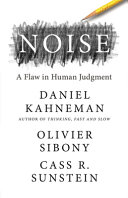
Noise refers to the variability in judgments that should ideally be the same. It is a critical concept that highlights how different people can arrive at different conclusions based on the same data. The authors, Daniel Kahneman, Olivier Sibony, and Cass Sunstein, delve into the different types of noise—such as systemic noise and random noise—and how it affects decision-making processes across various fields, from medicine to law. They emphasize that noise is not merely an error but a significant factor that can lead to inconsistencies and poor outcomes. By recognizing and understanding noise, individuals and organizations can work towards minimizing its impact, leading to more accurate and reliable judgments.
Continue readingThe book illustrates that noise has tangible costs, both in financial terms and in terms of human well-being. For instance, in legal settings, inconsistent sentencing can lead to a lack of trust in the judicial system, while in healthcare, varying diagnoses can result in misdiagnoses and inappropriate treatments. The authors provide compelling examples and statistics to show how noise can lead to billions of dollars in losses across industries. By quantifying these costs, the authors make a strong case for the importance of addressing noise in decision-making processes, urging organizations to recognize noise as a significant issue that warrants attention and resources.
Continue readingKahneman, Sibony, and Sunstein propose various frameworks and strategies to reduce noise in decision-making. They advocate for structured decision-making processes, which include the use of checklists, algorithms, and statistical models to guide judgments. These frameworks help minimize the subjective biases and variability that can lead to noise. The authors also emphasize the importance of training decision-makers to recognize their own biases and the inherent noise in their judgments. By implementing these structured approaches, organizations can improve the consistency and accuracy of their decisions, leading to better outcomes.
Continue readingThe authors explore the role of algorithms in decision-making and their potential to reduce noise. They argue that while human judgment is often flawed due to biases and noise, algorithms can provide a more consistent and objective basis for decisions. The book discusses various instances where algorithms have outperformed human judgment, such as in hiring processes and medical diagnoses. However, the authors also caution against over-reliance on algorithms without understanding their limitations. They encourage a balanced approach where algorithms complement human judgment rather than replace it entirely, leading to more informed and reliable decisions.
Continue readingKahneman, Sibony, and Sunstein highlight the need for cultural and organizational changes to address noise effectively. They argue that organizations must foster environments that value consistency and accuracy over subjective judgment. This includes promoting transparency in decision-making processes and encouraging feedback and accountability. The authors discuss the importance of leadership in driving this cultural shift, as leaders play a crucial role in setting the tone and priorities for their organizations. By cultivating a culture that prioritizes noise reduction, organizations can enhance their decision-making capabilities and improve overall performance.
Continue readingA key takeaway from the book is the importance of raising awareness about noise and its implications. The authors advocate for education and training programs that help individuals recognize the impact of noise on their judgments. By increasing awareness, individuals can become more mindful of their decision-making processes and the potential for variability in their judgments. The authors suggest that organizations invest in training that equips employees with the tools to identify and mitigate noise, ultimately leading to better decision-making outcomes. This emphasis on awareness and education is crucial for fostering a more informed and competent workforce.
Continue readingIn the concluding sections, the authors discuss the future of decision-making in light of their findings on noise. They envision a landscape where organizations leverage technology and structured processes to enhance decision-making accuracy. The authors also emphasize the ongoing need for research and dialogue around noise, encouraging scholars and practitioners to continue exploring this critical issue. By embracing a future where noise is acknowledged and addressed, organizations can strive for greater consistency and reliability in their judgments, ultimately leading to improved outcomes across various sectors.
Continue readingThe reading time for Noise depends on the reader's pace. However, this concise book summary covers the 7 key ideas from Noise, allowing you to quickly understand the main concepts, insights, and practical applications in around 22 min.
Noise is definitely worth reading. The book covers essential topics including Understanding Noise, The Cost of Noise, Decision-Making Frameworks, providing practical insights and actionable advice. Whether you read the full book or our concise summary, Noise delivers valuable knowledge that can help you improve your understanding and apply these concepts in your personal or professional life.
Noise was written by Daniel Kahneman, Olivier Sibony.
If you enjoyed Noise by Daniel Kahneman, Olivier Sibony and want to explore similar topics or deepen your understanding, we highly recommend these related book summaries:
These books cover related themes, complementary concepts, and will help you build upon the knowledge gained from Noise. Each of these summaries provides concise insights that can further enhance your understanding and practical application of the ideas presented in Noise.