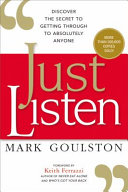
Book cover Just Listen
Select an audio
0:00
Intro - Just Listen --:--
1. The Power of Listening --:--
2. Empathy and Emotional Engagement --:--
3. The 'Listening Cycle' --:--
4. Overcoming Resistance and Defensiveness --:--
5. The Art of Persuasion --:--
6. Building Trust and Rapport --:--
7. Practical Applications in Various Contexts --:--
Just Listen

Mark Goulston

Discover the Secret to Getting Through to Absolutely Anyone

23 min

Summary

In 'Just Listen', Mark Goulston presents a compelling guide to effective communication through the art of listening. The book is built on the premise that listening is a powerful tool that can transform relationships and...

Continue reading
In 'Just Listen', Mark Goulston presents a compelling guide to effective communication through the art of listening. The book is built on the premise that listening is a powerful tool that can transform relationships and influence outcomes. Goulston argues that many communication breakdowns stem from a lack of genuine listening and understanding. By honing listening skills, individuals can create deeper connections, resolve conflicts, and persuade others more effectively. The author emphasizes the importance of empathy and emotional engagement, encouraging readers to connect with others on a deeper level. Through the 'Listening Cycle,' Goulston outlines the essential stages of effective listening—focusing, understanding, responding, and remembering. This framework serves as a roadmap for improving communication skills and fostering meaningful conversations. Overcoming resistance and defensiveness is another critical focus of the book. Goulston provides strategies for creating a safe space for dialogue, validating feelings, and reframing negative statements. These techniques are essential for encouraging openness and reducing defensiveness in conversations. The art of persuasion is also explored, with Goulston emphasizing that persuasion is about guiding others toward mutually beneficial outcomes rather than manipulation. He introduces the concept of 'persuasion bridges' to help readers craft messages that resonate with their audience. Building trust and rapport is another key theme, with Goulston highlighting the importance of consistency, reliability, and authenticity in communication. Practical applications of the concepts discussed are woven throughout the book, with case studies and exercises that empower readers to implement the strategies in their own lives. Overall, 'Just Listen' serves as a comprehensive guide to mastering the art of communication through effective listening, empathy, and persuasion, making it an invaluable resource for anyone looking to improve their interpersonal skills.

The Power of Listening

In 'Just Listen', the author Mark Goulston emphasizes the transformative power of listening. Listening is not merely a passive act; it is an active engagement that can foster trust, rapport, and understanding. Goulston i...

Continue reading
Listening is often underestimated in its significance, yet it is a powerful tool that can profoundly influence interactions and relationships. The concept presented emphasizes that listening transcends mere silence while another person speaks; it requires active participation and a genuine commitment to understanding their perspective. This active engagement is crucial in fostering trust and rapport, as individuals are more likely to feel valued and respected when they believe their thoughts and feelings are being acknowledged.

The idea of "listening to connect" is pivotal in this discourse. It suggests that the goal of listening should not only be to hear the words being spoken but to connect with the speaker on a deeper emotional level. This connection can create an atmosphere of safety and openness, where individuals feel encouraged to share their thoughts without fear of judgment. When people feel understood, they are more likely to engage in meaningful dialogue, which can lead to richer conversations and more profound insights.

Moreover, the ability to listen actively can be a game-changer in conflict resolution. Many disputes arise from misunderstandings or a lack of communication. By honing listening skills, individuals can uncover the underlying issues that may be causing tension. This approach allows for a more empathetic response, as understanding the other person's viewpoint can lead to finding common ground and collaborative solutions.

To cultivate effective listening skills, various practical techniques are suggested. Maintaining eye contact is one such technique, as it signals to the speaker that they have your full attention and that you are engaged in what they are saying. Additionally, using non-verbal cues such as nodding or leaning slightly forward can reinforce your interest and encourage the speaker to continue sharing. These body language signals can significantly enhance the listening experience, making it feel more interactive and supportive.

Asking open-ended questions is another powerful tool in the arsenal of effective listening. Such questions invite the speaker to elaborate on their thoughts and feelings, providing them with the opportunity to express themselves more fully. This not only deepens the conversation but also demonstrates that you are genuinely interested in their perspective, further strengthening the bond between the individuals involved.

In both personal and professional contexts, these listening skills are invaluable. In the workplace, for instance, leaders who practice active listening can foster a culture of collaboration and innovation, as employees feel empowered to share their ideas and concerns. In personal relationships, effective listening can lead to greater intimacy and understanding, as partners learn to navigate their differences with empathy and respect.

Ultimately, the transformative power of listening lies in its ability to create connections, resolve conflicts, and influence others positively. By adopting a mindset that prioritizes listening as a vital component of communication, individuals can unlock the potential for deeper relationships and more meaningful interactions in every aspect of their lives.

Empathy and Emotional Engagement

Goulston emphasizes the importance of empathy in communication. He argues that to truly connect with others, one must understand their emotions and perspectives. This emotional engagement goes beyond simply hearing words...

Continue reading
The concept of empathy and emotional engagement is presented as a foundational element in effective communication. It is posited that to forge genuine connections with others, individuals must delve deeper than mere verbal exchanges; they must strive to comprehend the emotions and perspectives that underpin those exchanges. This goes beyond the surface level of conversation, where words are spoken but feelings may not be fully addressed or acknowledged.

Empathy is characterized as the ability to place oneself in another person's shoes, to truly feel what they are feeling, and to understand their point of view. This understanding is crucial in a variety of contexts, whether in personal relationships, professional interactions, or even casual conversations. The author emphasizes that emotional engagement is not just a nicety; it is a critical component that can significantly enhance the effectiveness of communication.

To facilitate this emotional connection, the notion of "empathy triggers" is introduced. These are specific phrases, actions, or gestures that can evoke a sense of empathy from others. By employing these triggers, individuals can cultivate an atmosphere of trust and openness, making it easier for others to share their thoughts and feelings. This can lead to more productive discussions and a greater likelihood of achieving mutual understanding.

The book provides practical examples illustrating how empathy can be effectively utilized in various situations. For instance, in negotiations, showing empathy can help de-escalate tensions and foster a collaborative spirit, leading to outcomes that are beneficial for all parties involved. In conflict resolution, acknowledging the emotions of those involved can pave the way for reconciliation, as individuals feel heard and validated. In leadership contexts, empathetic leaders are often more successful because they can inspire loyalty and commitment from their teams by demonstrating that they care about their employees' well-being.

Ultimately, the ability to empathize is framed as an essential skill for anyone seeking to influence others or communicate effectively. It is portrayed as a powerful tool that can transform interactions, allowing for deeper connections and more meaningful exchanges. By mastering the art of empathy and emotional engagement, individuals can enhance their communication skills and foster a more harmonious environment in both personal and professional realms.

The 'Listening Cycle'

The 'Listening Cycle' is a key framework introduced in the book that outlines the stages of effective listening. Goulston describes the cycle as consisting of four stages: focusing, understanding, responding, and remembe...

Continue reading
The concept of the Listening Cycle is a fundamental framework that emphasizes the importance of effective listening in communication. This cycle is structured into four distinct stages, each playing a vital role in enhancing interpersonal interactions and ensuring that communication is not only heard but also understood and valued.

The first stage, focusing, is about dedicating undivided attention to the speaker. In a world filled with distractions, this stage requires individuals to consciously set aside their own thoughts, devices, and external interruptions to fully engage with the person speaking. It involves not just hearing the words but also paying attention to non-verbal cues such as body language and tone of voice. By doing so, listeners can create a safe space for the speaker, which fosters trust and openness. This initial stage is crucial because it establishes the foundation for all subsequent interactions and demonstrates respect for the speaker's message.

Moving to the second stage, understanding, this involves processing the information being conveyed. It requires active engagement with both the content and the emotions behind the words. Effective listeners need to interpret the message accurately, which may involve asking clarifying questions or paraphrasing what they have heard to ensure comprehension. This stage is not merely about grasping the facts but also about empathizing with the speaker's feelings and perspectives. Understanding goes beyond surface-level listening, as it seeks to connect with the speaker on a deeper emotional level, which can lead to more meaningful conversations and relationships.

The third stage, responding, is where the listener provides feedback to the speaker. This feedback can take various forms, such as verbal affirmations, summarizing key points, or expressing empathy. The goal of responding is to demonstrate that the listener has not only heard but also comprehended the message. Effective responses validate the speaker's experience and encourage further dialogue. This stage is critical because it signals to the speaker that their thoughts and feelings are valued, fostering a more collaborative and engaged communication environment.

Finally, the fourth stage, remembering, emphasizes the importance of retaining information for future interactions. Good listeners make a conscious effort to recall key details from past conversations, which can enhance future discussions and build stronger relationships. Remembering is not just about memorizing facts; it involves integrating the insights gained from previous interactions into future conversations. This stage reinforces the idea that listening is an ongoing process, and the ability to recall information demonstrates respect and care for the speaker's message.

To effectively master the Listening Cycle, individuals are encouraged to practice each stage through various exercises and techniques. These practical approaches can help develop active listening skills, improve emotional intelligence, and enhance overall communication abilities. By understanding and applying the principles of the Listening Cycle, individuals can significantly improve their interactions, leading to more productive and fulfilling relationships both personally and professionally.

Overcoming Resistance and Defensiveness

One of the significant challenges in communication is overcoming resistance and defensiveness from others. Goulston discusses various strategies for breaking down barriers and fostering open dialogue. He highlights the i...

Continue reading
Effective communication often encounters significant hurdles, primarily in the form of resistance and defensiveness from the individuals involved. These barriers can stem from various sources, including past experiences, emotional triggers, or simply the nature of the conversation itself. The challenge lies in navigating these obstacles to foster an environment conducive to open and honest dialogue.

Creating a safe space for conversation is paramount. This environment allows individuals to express their thoughts, feelings, and concerns without the fear of being judged or dismissed. When people feel safe, they are more likely to lower their defenses and engage genuinely in the discussion. The importance of psychological safety cannot be overstated, as it sets the foundation for meaningful interactions.

To break down these barriers, several strategies can be employed. One effective approach is validating the other person's feelings. This involves acknowledging their emotions and demonstrating that their feelings are understood and respected. Validation does not necessarily mean agreeing with the other person, but rather recognizing their perspective as legitimate. This can significantly reduce feelings of defensiveness, as individuals often feel more heard and valued when their emotions are acknowledged.

Another technique is the use of humor. Humor can serve as a powerful tool to diffuse tension during difficult conversations. It lightens the mood and can help both parties to step back from their emotional responses, allowing for a more relaxed and open exchange. However, it is essential to use humor appropriately and sensitively, ensuring it does not come across as dismissive or belittling.

Reframing negative statements into positive ones is also a critical strategy in overcoming defensiveness. This technique involves taking a potentially confrontational or critical comment and rephrasing it in a way that focuses on constructive outcomes or shared goals. For example, instead of saying, "You never listen to me," one might say, "I feel unheard when we discuss this topic. Can we find a way to ensure we both feel understood?" This shift in language not only reduces defensiveness but also promotes collaboration and problem-solving.

Real-life examples illustrate the effectiveness of these strategies across various contexts. In personal relationships, employing these techniques can lead to deeper understanding and stronger connections. In workplace dynamics, they can facilitate better teamwork and collaboration, ultimately enhancing productivity and morale. In negotiations, reducing defensiveness can lead to more successful outcomes, as parties are more willing to engage in compromise and find mutually beneficial solutions.

In summary, overcoming resistance and defensiveness in communication is a multifaceted challenge that requires intentional strategies. By creating a safe space for dialogue, validating feelings, using humor appropriately, and reframing negative statements, individuals can foster more productive and meaningful conversations. These approaches not only enhance interpersonal relationships but also contribute to more effective communication in various settings.

The Art of Persuasion

Goulston delves into the nuances of persuasion, explaining that it is not about manipulation but rather about guiding others toward a mutually beneficial outcome. He emphasizes the importance of understanding the other p...

Continue reading
The exploration of persuasion within the context of effective communication reveals that it is fundamentally an art grounded in empathy and understanding rather than mere manipulation. The concept emphasizes that true persuasion is about guiding individuals toward a resolution or decision that benefits both parties involved. This approach requires a deep awareness of the other person’s perspective, which means actively listening to their thoughts, feelings, and values.

To effectively persuade someone, one must first establish a connection that resonates with their interests. This is where the notion of "persuasion bridges" becomes critical. These bridges are metaphorical links created between the speaker’s message and the listener’s needs. By identifying what is important to the other person, the speaker can tailor their message in a way that feels relevant and appealing. This alignment not only fosters trust but also enhances the likelihood of a positive response.

The author suggests that successful persuasion hinges on the ability to craft messages that are relatable and compelling. Storytelling emerges as a powerful tool in this regard, as narratives can engage listeners on an emotional level, making the message more memorable and impactful. When individuals can visualize a story, they are more likely to connect with its themes and messages, which can significantly influence their attitudes and decisions.

Furthermore, appealing to emotions is a crucial aspect of persuasion. People often make decisions based on how they feel rather than purely on logic or facts. By tapping into the emotional core of the audience, a speaker can create a sense of urgency or importance around their message, thereby increasing the chances of persuading the listener. This emotional connection can be reinforced through the use of social proof, which involves demonstrating that others have found value in what is being proposed. When individuals see that their peers or respected figures endorse an idea or product, they are more inclined to consider it favorably.

Ultimately, the art of persuasion is intricately linked to effective listening. By practicing active listening, individuals can better understand the motivations and concerns of others, which allows them to construct messages that resonate more deeply. This empathetic approach not only enhances the persuasive effort but also builds stronger relationships, as individuals feel heard and valued. The interplay between listening and persuasion creates a dynamic where both parties can arrive at a solution that honors their respective needs and aspirations, fostering collaboration and mutual respect.

Building Trust and Rapport

Trust and rapport are foundational elements of any successful communication. Goulston explores the factors that contribute to building trust, including consistency, reliability, and authenticity. He argues that trust is ...

Continue reading
Building trust and rapport is a critical aspect of effective communication, serving as the bedrock upon which successful interactions and relationships are built. The notion of trust encompasses several key elements that are essential for fostering a genuine connection with others. Consistency is one of the primary factors; it refers to the ability to behave predictably over time, which allows others to feel secure in their interactions with you. When individuals know that they can rely on you to act in a certain way, it diminishes uncertainty and fosters a sense of safety.

Reliability is closely intertwined with consistency and pertains to the assurance that you will follow through on your commitments. When people perceive you as reliable, they are more likely to open up and engage with you, knowing that you will honor your word and be there for them when needed. Authenticity, on the other hand, involves being genuine and true to oneself. When you present yourself honestly, without pretense, it encourages others to reciprocate, creating a more transparent and trusting environment.

The process of building trust is not instantaneous; it develops gradually through repeated positive interactions. Each positive encounter reinforces the perception of trustworthiness, allowing relationships to deepen over time. Open communication plays a pivotal role in this process, as it allows individuals to express their thoughts, feelings, and concerns freely. When communication is open, misunderstandings can be addressed promptly, and conflicts can be resolved amicably, further strengthening the bond between individuals.

To establish rapport effectively, there are several actionable strategies that can be employed. One of these strategies is finding common ground, which involves identifying shared interests or experiences that can serve as a basis for connection. This shared understanding creates a sense of belonging and can significantly enhance the quality of interactions.

Another important technique is mirroring body language. This involves subtly mimicking the gestures, posture, and facial expressions of the person you are communicating with. Mirroring can create an unconscious sense of empathy and understanding, making the other person feel more comfortable and connected to you. It signals that you are engaged and attuned to their emotions, fostering a deeper sense of rapport.

Using affirming language is also crucial in building rapport. This means employing words and phrases that validate the other person's feelings and viewpoints. When individuals feel heard and understood, they are more likely to trust you and open up further. Affirmation can take many forms, from simple acknowledgments of what someone has said to more elaborate expressions of empathy and support.

Moreover, the concept of vulnerability plays an essential role in the trust-building process. Sharing personal stories and experiences can create a sense of intimacy and connection that is difficult to achieve through surface-level interactions. When you allow yourself to be vulnerable, you demonstrate that you are willing to take risks in the relationship, which can encourage others to do the same. This mutual sharing of personal narratives can lead to deeper emotional connections and a more profound understanding of each other.

Ultimately, by focusing on these strategies—consistency, reliability, authenticity, finding common ground, mirroring body language, using affirming language, and embracing vulnerability—individuals can cultivate stronger connections with others. These connections not only enrich personal relationships but also pave the way for more fruitful collaborations in professional settings. The emphasis on trust and rapport underscores the idea that effective communication is not merely about exchanging information; it is about building meaningful relationships that can enhance both personal and professional interactions.

Practical Applications in Various Contexts

Throughout 'Just Listen', Goulston provides numerous practical applications for the concepts discussed. He illustrates how the principles of effective listening, empathy, and persuasion can be applied in various contexts...

Continue reading
The discussion on practical applications within the context of effective listening, empathy, and persuasion emphasizes the importance of these skills in various aspects of life. The author delves into how active listening is not merely a passive act but an essential component of meaningful communication. By engaging fully with others, one can foster trust and understanding, which are crucial for building strong personal relationships.

In personal relationships, the principles of empathy allow individuals to connect on a deeper level, recognizing and validating the emotions of others. This creates a safe environment where open dialogue can flourish, leading to more harmonious interactions. The author provides examples of how individuals have transformed their relationships by simply practicing active listening, which encourages others to share their thoughts and feelings more freely.

In the workplace, the application of these principles can lead to enhanced teamwork and collaboration. The author illustrates how leaders who actively listen to their team members can identify underlying issues and address concerns before they escalate. This proactive approach not only boosts morale but also increases productivity, as team members feel valued and understood. The text highlights case studies from various organizations that have successfully implemented these strategies, showcasing the tangible benefits of fostering a culture of open communication.

Public speaking is another area where the principles discussed can be effectively applied. The author explains how a speaker who engages the audience through listening and responding to their needs can create a more impactful presentation. By understanding the audience's perspectives, a speaker can tailor their message to resonate more deeply, making it more persuasive and memorable. Anecdotes from successful speakers illustrate how the ability to connect with an audience through active listening can enhance the overall effectiveness of their communication.

Moreover, the author provides practical exercises designed to help readers cultivate these skills in their daily lives. These exercises encourage individuals to practice active listening in various scenarios, whether in personal conversations, team meetings, or public speaking engagements. By incorporating these strategies into their routine, readers can gradually develop a more empathetic approach to communication, ultimately leading to better relationships and more successful interactions.

Overall, the exploration of practical applications in different contexts serves to empower individuals. It emphasizes that effective communication is not just an innate talent but a skill that can be cultivated through practice and dedication. By applying the principles of listening, empathy, and persuasion, individuals can navigate challenging conversations, lead teams more effectively, and negotiate with greater success, thereby achieving their desired outcomes in both personal and professional realms.

Who Should Read This Book?

This book is ideal for individuals in leadership roles, sales professionals, educators, therapists, and anyone seeking to improve their communication skills. It is particularly beneficial for those who wish to foster better relationships, resolve conflicts, and influence others positively. Additionally, anyone interested in personal development and enhancing their emotional intelligence will find valuable insights within its pages.

Summaries like Just Listen

Listen Like You Mean It
Ximena Vengoechea
Reclaiming the Lost Art of True Connection
20 min
How to Say Anything to Anyone
Shari Harley
A Guide to Building Business Relationships That Really Work
20 min
The Influential Mind
Tali Sharot
What the Brain Reveals About Our Power to Change Others
21 min
Mindreader
David J. Lieberman, PhD
The New Science of Deciphering What People Really Think, What They Really Want, and Who They Really Are
19 min
Exactly what to Say
Phil M. Jones
The Magic Words for Influence and Impact
20 min
Why Can't We Talk?
John Backman
Christian Wisdom on Dialogue as a Habit of the Heart
20 min
Cracking the Communication Code
Katarina Hoffmann, Liv Larsson
21 min
Conversations Worth Having
Cheri Torres, David L. Cooperrider, Jacqueline M. Stavros
Using Appreciative Inquiry to Fuel Productive and Meaningful Engagement
21 min
Failure to Connect
Jane M. Healy
How Computers Affect Our Children's Minds--For Better and Worse
21 min
Powerful Phrases for Dealing with Difficult People
Renee Evenson
Over 325 Ready-to-Use Words and Phrases for Working with Challenging Personalities
20 min
Power Questions
Andrew Sobel, Jerold Panas
Build Relationships, Win New Business, and Influence Others
20 min
We Need to Talk
Ian Williamson
A Straight-Talking Guide to Raising Resilient Teens
20 min
Read the Face
Elisa Petrini, Eric Standop
Face Reading for Success in Your Career, Relationships, and Health
20 min
If I Understood You, Would I Have This Look on My Face?
Alan Alda
My Adventures in the Art and Science of Relating and Communicating
21 min
The Art of Communicating
Thich Nhat Hanh
20 min

About the Author

Mark Goulston

Mark Goulston is a psychiatrist, author, and consultant known for his work in the fields of personal development and business communication. He has gained recognition for his expertise in listening and empathy, which he emphasizes as essential skills for effective leadership and interpersonal relationships. Goulston has authored several books, including titles that focus on improving communication skills and fostering emotional intelligence.

In addition to his writing, Goulston has served as a consultant to various organizations, helping them enhance their workplace culture and improve team dynamics. His insights often draw from his background in psychiatry, where he has applied psychological principles to real-world business challenges.

Goulston is also known for his speaking engagements, where he shares strategies for personal and professional growth. His work often addresses the importance of understanding others' perspectives and building meaningful connections, which he believes are crucial for success in both personal and professional realms.

Overall, Mark Goulston's contributions to the fields of personal development and business communication reflect his commitment to helping individuals and organizations thrive through improved understanding and collaboration.

Just Listen FAQs

How long does it take to read Just Listen?

The reading time for Just Listen depends on the reader's pace. However, this concise book summary covers the 7 key ideas from Just Listen, allowing you to quickly understand the main concepts, insights, and practical applications in around 23 min.

Is Just Listen a good book? Is it worth reading?

Just Listen is definitely worth reading. The book covers essential topics including The Power of Listening, Empathy and Emotional Engagement, The 'Listening Cycle', providing practical insights and actionable advice. Whether you read the full book or our concise summary, Just Listen delivers valuable knowledge that can help you improve your understanding and apply these concepts in your personal or professional life.

Who is the author of Just Listen?

Just Listen was written by Mark Goulston.

What to read after Just Listen?

If you enjoyed Just Listen by Mark Goulston and want to explore similar topics or deepen your understanding, we highly recommend these related book summaries:

  • Listen Like You Mean It by Ximena Vengoechea
  • How to Say Anything to Anyone by Shari Harley
  • The Influential Mind by Tali Sharot
  • Mindreader by David J. Lieberman, PhD
  • Exactly what to Say by Phil M. Jones

These books cover related themes, complementary concepts, and will help you build upon the knowledge gained from Just Listen. Each of these summaries provides concise insights that can further enhance your understanding and practical application of the ideas presented in Just Listen.