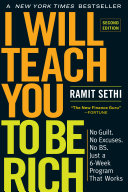
Book cover I Will Teach You to Be Rich
Select an audio
0:00
Intro - I Will Teach You to Be Rich --:--
1. The Importance of a Rich Life --:--
2. Automate Your Finances --:--
3. Conscious Spending Plan --:--
4. Invest Early and Often --:--
5. Understanding Credit and Debt --:--
6. Negotiation Skills --:--
7. Investing in Relationships and Personal Growth --:--
I Will Teach You to Be Rich

Ramit Sethi

No Guilt. No Excuses. No BS. Just a 6-Week Program That Works

20 min

Summary

In 'I Will Teach You to Be Rich' Ramit Sethi provides a comprehensive guide to personal finance that is both practical and engaging. The book is structured around six weeks of actionable steps that readers can take to im...

Continue reading
In 'I Will Teach You to Be Rich' Ramit Sethi provides a comprehensive guide to personal finance that is both practical and engaging. The book is structured around six weeks of actionable steps that readers can take to improve their financial situations. Sethi's writing is approachable, filled with humor and relatable anecdotes, making complex financial concepts easy to understand. The book focuses on creating a 'rich life,' which is defined by personal values and goals rather than societal expectations of wealth. This foundational idea encourages readers to think deeply about what they truly want from their finances.

Sethi advocates for automating finances to simplify money management, allowing individuals to focus on enjoying life without the constant stress of financial decision-making. The conscious spending plan he introduces encourages readers to align their spending with their values, allowing for guilt-free indulgence in areas that matter most to them while still being financially responsible.

Investing is another major theme, with Sethi stressing the importance of starting early and taking advantage of compound interest. He demystifies the investment process, making it accessible to those who may feel intimidated by the stock market. Additionally, the book tackles the important topic of credit and debt, providing readers with the knowledge to manage their credit scores and make informed decisions about borrowing.

Negotiation skills are highlighted as a crucial tool for financial success, empowering readers to advocate for themselves in various financial situations. Lastly, Sethi emphasizes the importance of investing in relationships and personal growth, reinforcing the idea that true wealth encompasses more than just financial assets.

Overall, the book is a blend of practical advice, motivational insights, and a fresh perspective on personal finance. Sethi's engaging style and actionable steps make it a valuable resource for anyone looking to improve their financial literacy and achieve a life that aligns with their values.

The Importance of a Rich Life

The book emphasizes defining what a 'rich life' means to you personally rather than adhering to societal standards of wealth. The author, Ramit Sethi, encourages readers to think about their values and what they genuinel...

Continue reading
The concept of a 'rich life' is fundamentally about personal fulfillment and aligning one's financial decisions with individual values and aspirations. It challenges the conventional notion of wealth, which often equates richness with material possessions or societal status. Instead, it invites readers to embark on a journey of self-discovery to define what richness truly means to them, emphasizing that this definition is subjective and varies from person to person.

In this exploration, readers are encouraged to engage in deep introspection regarding their priorities and desires. This involves asking critical questions about how they want to allocate their time, what experiences they deeply cherish, and what financial independence looks like in their context. For some, a rich life may mean traveling the world and experiencing diverse cultures, while for others, it could revolve around spending quality time with family or pursuing passions and hobbies that bring joy and satisfaction.

The emphasis is placed on understanding that financial freedom is not merely about accumulating wealth for the sake of it; rather, it is about having the autonomy to make choices that resonate with one's core values. This perspective shifts the focus from external benchmarks of success, such as flashy cars or large houses, to internal benchmarks that reflect personal happiness and satisfaction.

By prioritizing what truly matters, individuals can craft a financial plan that is not only practical but also meaningful. This approach encourages readers to identify their own 'money dials'—areas where they can afford to spend more to enhance their quality of life while being frugal in other areas that do not bring them joy.

Furthermore, this foundational concept serves as a precursor to more actionable financial strategies throughout the text. It sets the stage for practical advice on budgeting, investing, and saving, all of which are tailored to support the pursuit of a rich life as defined by the individual. Ultimately, this philosophy promotes a holistic view of wealth, where financial literacy and management become tools for achieving a life that is rich in experiences, fulfillment, and personal satisfaction rather than just a bank balance.

Automate Your Finances

One of the core principles Sethi introduces is the automation of finances. He argues that by setting up automatic transfers to savings and investment accounts, individuals can simplify their financial management and redu...

Continue reading
One of the fundamental concepts presented revolves around the automation of finances, which is emphasized as a transformative approach to managing personal finances. The premise is that by automating financial tasks, individuals can significantly alleviate the mental load associated with money management. This idea is rooted in the understanding that financial decisions can often be overwhelming, leading to procrastination or poor choices due to the complexity of managing multiple accounts, bills, and savings goals.

The process of automation involves setting up systems that automatically transfer funds from one account to another without requiring active intervention each time a transaction is necessary. For instance, individuals can establish automatic transfers from their checking account to their savings account or investment accounts on a regular basis, such as weekly or monthly. This ensures that a portion of their income is consistently directed toward savings and investments, which is crucial for building wealth over time.

Moreover, the automation of bill payments is another critical aspect. By setting up automatic payments for recurring expenses such as utilities, loans, and subscriptions, individuals can avoid late fees and the stress of remembering due dates. This not only improves financial discipline but also enhances credit scores by ensuring that payments are made on time.

The actionable steps provided include practical guidance on how to set these systems up effectively. This may involve utilizing online banking features, mobile apps, or financial management tools that facilitate automation. The goal is to create a seamless financial ecosystem where money flows efficiently without the need for constant monitoring.

Additionally, the automation strategy encourages a mindset shift where individuals can prioritize their financial goals without the constant burden of making decisions about money. By establishing a reliable system, they can focus more on enjoying life, pursuing interests, and engaging in activities that bring fulfillment, while their finances work steadily in the background.

This approach not only fosters better financial habits but also instills a sense of security and control over one’s financial future. Over time, the cumulative effect of consistent savings and investment contributions can lead to significant growth in wealth, paving the way for financial independence and the ability to pursue long-term goals such as retirement, home ownership, or travel. Ultimately, the automation of finances is presented as a powerful tool for anyone looking to simplify their financial life and achieve greater peace of mind regarding their financial situation.

Conscious Spending Plan

Sethi introduces the concept of a 'conscious spending plan' which encourages readers to prioritize their spending according to their values. Unlike traditional budgeting, which can feel restrictive, Sethi's method allows...

Continue reading
The concept of a conscious spending plan is a transformative approach to managing personal finances that diverges from traditional budgeting methods, which often feel constraining and punitive. This innovative strategy emphasizes aligning your spending habits with your core values, allowing for a more fulfilling and enjoyable financial experience.

In this framework, individuals are encouraged to categorize their expenditures into four distinct areas: fixed costs, investments, savings, and guilt-free spending. Fixed costs encompass necessary expenses such as rent or mortgage payments, utilities, and insurance, which are essential for maintaining one’s standard of living. Investments refer to expenditures that contribute to long-term wealth accumulation, such as retirement accounts or education. Savings involve setting aside money for future needs or emergencies, ensuring financial security and peace of mind.

The most compelling aspect of this plan is the category of guilt-free spending, which is designed to grant individuals the freedom to spend money on things that genuinely bring them joy and satisfaction without the burden of guilt that often accompanies discretionary spending. By identifying what truly matters to you—whether it’s dining out, traveling, or pursuing hobbies—you can allocate a portion of your budget specifically for these indulgences. This encourages a mindset of abundance rather than scarcity, allowing you to enjoy life’s pleasures while still being financially responsible.

The conscious spending plan promotes a balanced approach to financial management, where the goal is not merely to cut costs but to make intentional choices that reflect personal values. This method fosters a sense of empowerment, as it places the individual in control of their financial destiny. Rather than adhering to a rigid budget that may lead to feelings of deprivation, this plan encourages a holistic view of spending that includes both enjoyment and prudence.

Ultimately, the conscious spending plan is about achieving harmony between immediate gratification and long-term financial health. It invites individuals to be proactive in their financial decisions, ensuring that they can savor the present while also preparing for the future. By adopting this mindset, individuals can transform their relationship with money from one of stress and anxiety to one of confidence and joy, making financial management a more positive and rewarding aspect of their lives.

Invest Early and Often

In the book, Sethi emphasizes the importance of starting to invest as early as possible. He explains the power of compound interest and how even small, consistent investments can grow significantly over time. The author ...

Continue reading
Investing early and often is a fundamental principle that underscores the potential for wealth accumulation over time. The concept revolves around the idea that the sooner you begin investing your money, the more time it has to grow, primarily due to the phenomenon known as compound interest. This principle means that not only do your initial investments earn returns, but those returns also generate additional returns over time. This creates a snowball effect where your wealth can increase exponentially rather than linearly.

The discussion around compound interest is crucial because it highlights how even modest amounts of money, if invested consistently and over a long period, can lead to substantial financial growth. For instance, starting to invest in your twenties, even if the amounts are small, can yield significantly more than waiting until your thirties or forties to start investing larger sums. This is due to the additional years of compounding that your money can benefit from.

To make investing accessible, the author breaks down various investment vehicles available to individuals. Stocks, which represent ownership in companies, can offer high returns but come with higher risks. Bonds, on the other hand, are generally seen as safer investments that provide fixed returns over time. Index funds, which track a specific market index, are highlighted as a particularly effective way to invest because they tend to have lower fees and provide diversification without requiring extensive market knowledge.

Moreover, the text emphasizes the significance of employer-sponsored retirement plans, such as 401(k)s, which often come with employer matching contributions. This is essentially free money that can significantly boost your retirement savings. The author argues that taking full advantage of these plans is a critical step in building a secure financial future.

The investment process can often seem daunting, especially for those who are new to it or feel overwhelmed by the complexities of the stock market. The author aims to demystify this process, presenting it in a way that is approachable and understandable. He encourages readers to educate themselves on the basics of investing, which can empower them to make informed decisions rather than relying on financial advisors or getting caught up in market speculation.

A long-term investment strategy is presented as a more prudent approach compared to trying to time the market, which can be unpredictable and risky. The idea is to remain invested through market fluctuations, allowing your investments to ride out the ups and downs of the market cycle. This strategy not only helps mitigate risk but also aligns with the principle that time is an investor's greatest ally.

Ultimately, by embracing the habit of investing early and consistently, individuals can set themselves on a path toward financial success and security. The emphasis is on building a solid financial foundation that will support their future goals, whether that be retirement, purchasing a home, or achieving other personal financial milestones. Understanding these concepts and taking action can lead to a more secure financial future, making it imperative for readers to start investing as soon as they are able.

Understanding Credit and Debt

Sethi dedicates a significant portion of the book to understanding credit and debt management. He explains how credit scores work, why they matter, and how to improve them. The author provides practical tips for managing...

Continue reading
The discussion surrounding credit and debt management is crucial for anyone looking to establish a solid financial foundation. The author emphasizes the importance of understanding credit scores, which serve as a numerical representation of an individual's creditworthiness. This score is influenced by various factors, including payment history, credit utilization, length of credit history, types of credit accounts, and recent credit inquiries. By breaking down these components, the author clarifies how each element contributes to the overall score and why maintaining a good credit score is essential for securing favorable loan terms, lower interest rates, and even better insurance premiums.

Improving one's credit score is framed not as an insurmountable challenge but as an achievable goal with practical steps. The author provides actionable advice on how to improve credit scores over time, such as making payments on time, keeping credit utilization low, and regularly checking credit reports for errors. These steps are designed to empower readers to take control of their financial health, thereby fostering a proactive approach to credit management.

Debt is often viewed negatively, but the author reframes this perspective by presenting debt as a potential tool for financial growth. This involves understanding the difference between good debt and bad debt. Good debt, such as student loans or mortgages, can be leveraged to invest in education or property, leading to long-term financial benefits. On the other hand, bad debt, typically associated with high-interest credit cards or personal loans for non-essential purchases, can lead to financial strain if not managed properly.

The author outlines various strategies for managing and paying off debt effectively. This includes prioritizing high-interest debts first, which can lead to significant savings in interest payments over time. Readers are encouraged to create a structured repayment plan that fits their financial situation, whether through the snowball method, which focuses on paying off smaller debts first for psychological wins, or the avalanche method, which targets higher interest debts to save money in the long run.

Furthermore, the author stresses the importance of budgeting and tracking expenses, which are foundational skills that help individuals understand their cash flow. By having a clear picture of income versus expenses, readers can make informed decisions about how much they can allocate towards debt repayment and savings.

For young adults entering the credit landscape for the first time, this section serves as a vital resource. It equips them with the knowledge necessary to navigate the complexities of credit and debt responsibly. By fostering an understanding of these financial tools, individuals can avoid common pitfalls, make informed decisions that align with their long-term goals, and ultimately build a healthier relationship with money. This foundational knowledge not only prepares them for immediate financial challenges but also sets the stage for future financial success.

Negotiation Skills

Another key idea in Sethi's book is the importance of negotiation skills in achieving financial success. He argues that many people leave money on the table simply because they are uncomfortable negotiating. Sethi provid...

Continue reading
Negotiation skills play a crucial role in achieving financial success, as they enable individuals to advocate for themselves effectively in various situations that can impact their financial well-being. Many people often find themselves leaving potential money on the table due to a discomfort with negotiating. This discomfort can stem from a variety of factors, including fear of confrontation, lack of confidence, or simply not knowing how to approach the negotiation process.

The discussion emphasizes that negotiation is not just an innate talent but a skill that can be cultivated and refined over time through practice and experience. This perspective shifts the mindset from feeling powerless in financial discussions to recognizing that individuals possess the ability to influence outcomes in their favor. The book offers practical techniques that readers can employ in different contexts, such as negotiating salaries during job offers or performance reviews, discussing bills with service providers, or even negotiating prices when making purchases.

One of the key takeaways is the importance of preparation before entering any negotiation. This involves doing research to understand the market value of one's skills or the fair price of a product or service. By arming oneself with relevant information, individuals can enter negotiations with confidence, knowing what they deserve or what a reasonable offer should be.

Additionally, the text highlights the significance of framing the negotiation in a way that emphasizes mutual benefit. Instead of viewing negotiation as a zero-sum game where one party's gain is another's loss, it encourages a collaborative approach. This mindset can lead to more fruitful discussions and outcomes that satisfy both parties involved.

Another essential aspect discussed is the psychological component of negotiation. Many individuals struggle with the fear of rejection or the belief that they may be perceived negatively for asking for more. The material encourages readers to reframe these thoughts, understanding that negotiating is a standard part of business and personal transactions. It fosters a sense of empowerment, teaching that asking for what one deserves is not only acceptable but necessary for financial growth.

The narrative also suggests practicing negotiation in everyday situations, such as asking for discounts or negotiating terms with service providers, which can build confidence and skill over time. By taking small steps and gradually increasing the complexity of negotiations, individuals can develop a robust set of skills that will serve them well in more significant financial discussions.

Ultimately, the discussion around negotiation skills is about taking control of one's financial destiny. By adopting a mindset of confidence and assertiveness, individuals can significantly enhance their income potential and reduce expenses, leading to a more secure and prosperous financial future. This empowerment through negotiation not only impacts immediate financial situations but also fosters a long-term approach to wealth-building and financial independence.

Investing in Relationships and Personal Growth

Lastly, Sethi discusses the importance of investing in relationships and personal growth as part of a rich life. He emphasizes that financial success is not just about money but also about the people you surround yoursel...

Continue reading
The concept of investing in relationships and personal growth is presented as a crucial component of achieving a truly rich life, extending beyond mere financial wealth. This perspective highlights that financial success is often intertwined with the quality of the relationships we cultivate and the personal development we pursue.

The importance of surrounding oneself with the right people is emphasized, as these relationships can significantly influence one's mindset, motivation, and opportunities. Building a network of supportive, ambitious, and like-minded individuals can lead to collaborative opportunities, shared knowledge, and emotional support during challenging times. The author encourages readers to actively seek out and nurture these relationships, as they can serve as a foundation for both personal and professional growth.

Moreover, the idea of investing in education and continuous learning is underscored. This involves not only formal education but also self-directed learning, skill development, and seeking out experiences that challenge and expand one’s perspective. By committing resources—whether time, money, or effort—to personal growth, individuals can enhance their capabilities, adapt to changing circumstances, and increase their value in both the job market and personal endeavors.

Additionally, the emphasis on creating meaningful experiences speaks to the idea that life’s richness is often derived from the moments we share with others and the memories we create. Engaging in activities that foster connection, such as travel, community service, or simply spending quality time with loved ones, contributes to a deeper sense of fulfillment.

This holistic approach to wealth suggests that true richness encompasses a balanced life where financial stability is complemented by strong interpersonal relationships and ongoing personal development. By integrating these elements into their financial planning and life choices, individuals can cultivate a more enriched existence that aligns with their values and aspirations. Ultimately, the focus is on creating a life that is not only prosperous in terms of finances but also rich in experiences, connections, and personal achievements, leading to a more satisfying and meaningful journey.

Who Should Read This Book?

This book is ideal for young adults, recent graduates, and anyone looking to gain control over their finances. It is particularly beneficial for those who may feel overwhelmed by personal finance concepts or who have struggled with money management in the past. Readers seeking practical, actionable advice that resonates with modern financial realities will find Sethi's approach refreshing and empowering.

Summaries like I Will Teach You to Be Rich

Mind over Money
Brad Klontz, Ted Klontz
Overcoming the Money Disorders That Threaten Our Financial Health
21 min
Millionaire Teacher
Andrew Hallam
The Nine Rules of Wealth You Should Have Learned in School
19 min
Rich AF
Vivian Tu
The Money Mindset That Will Change Your Life
23 min
Your Money or Your Life
Joe Dominguez, Vicki Robin
9 Steps to Transforming Your Relationship with Money and Achieving Financial Independence: Fully Revised and Updated for 2018
20 min
Smart Women Finish Rich
David Bach
20 min
Baby Steps Millionaires
Dave Ramsey
How Ordinary People Built Extraordinary Wealth--and How You Can Too
21 min
You Don't Need a Budget
Dana Miranda
Stop Worrying about Debt, Spend without Shame, and Manage Money with Ease
18 min
The Psychology of Money
Morgan Housel
Timeless lessons on wealth, greed, and happiness
19 min
The Automatic Millionaire
David Bach
A Powerful One-Step Plan to Live and Finish Rich
19 min
We Should All Be Millionaires
Rachel Rodgers
A Woman’s Guide to Earning More, Building Wealth, and Gaining Economic Power
21 min
The Algebra of Wealth
Scott Galloway
A Simple Formula for Financial Security
22 min
Breaking Free from Broke
George Kamel
The Ultimate Guide to More Money and Less Stress
21 min
The Simple Path to Wealth
Jl Collins
Your Road Map to Financial Independence and a Rich, Free Life
20 min
Finance for the People
Paco de Leon
Getting a Grip on Your Finances
20 min
The Millionaire Dropout
Vince Stanzione
Fire Your Boss. Do What You Love. Reclaim Your Life!
19 min

About the Author

Ramit Sethi

Ramit Sethi is a well-known author, entrepreneur, and personal finance advisor, recognized for his expertise in money management and personal development. He gained prominence through his bestselling book "I Will Teach You to Be Rich," which offers practical advice on financial literacy, budgeting, and investing for young adults. Sethi's approach combines behavioral psychology with actionable strategies, making complex financial concepts accessible to a broad audience.

In addition to his writing, Sethi is the founder of GrowthLab, a company that helps individuals and businesses grow their online presence and financial success. He is also known for his engaging online courses and workshops that focus on various aspects of personal finance, entrepreneurship, and career development. His work emphasizes the importance of taking actionable steps toward financial independence and living a rich life, not just in terms of money but also in personal fulfillment.

Sethi has been featured in various media outlets, including The New York Times, The Wall Street Journal, and NPR, where he shares insights on personal finance and entrepreneurship. He is also known for his candid and often humorous approach to discussing money, which resonates with a diverse audience. Through his writing, speaking engagements, and online platforms, Ramit Sethi continues to influence and educate individuals on achieving financial success and personal growth.

I Will Teach You to Be Rich FAQs

How long does it take to read I Will Teach You to Be Rich?

The reading time for I Will Teach You to Be Rich depends on the reader's pace. However, this concise book summary covers the 7 key ideas from I Will Teach You to Be Rich, allowing you to quickly understand the main concepts, insights, and practical applications in around 20 min.

Is I Will Teach You to Be Rich a good book? Is it worth reading?

I Will Teach You to Be Rich is definitely worth reading. The book covers essential topics including The Importance of a Rich Life, Automate Your Finances, Conscious Spending Plan, providing practical insights and actionable advice. Whether you read the full book or our concise summary, I Will Teach You to Be Rich delivers valuable knowledge that can help you improve your understanding and apply these concepts in your personal or professional life.

Who is the author of I Will Teach You to Be Rich?

I Will Teach You to Be Rich was written by Ramit Sethi.

What to read after I Will Teach You to Be Rich?

If you enjoyed I Will Teach You to Be Rich by Ramit Sethi and want to explore similar topics or deepen your understanding, we highly recommend these related book summaries:

  • Mind over Money by Brad Klontz, Ted Klontz
  • Millionaire Teacher by Andrew Hallam
  • Rich AF by Vivian Tu
  • Your Money or Your Life by Joe Dominguez, Vicki Robin
  • Smart Women Finish Rich by David Bach

These books cover related themes, complementary concepts, and will help you build upon the knowledge gained from I Will Teach You to Be Rich. Each of these summaries provides concise insights that can further enhance your understanding and practical application of the ideas presented in I Will Teach You to Be Rich.