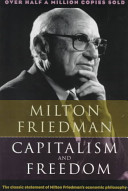
Milton Friedman argues that the primary role of government should be to maintain the framework of a free society, which includes protecting property rights, enforcing contracts, and ensuring a stable monetary system. He emphasizes that while government intervention can sometimes be justified, it should be limited to these essential functions to prevent the encroachment on individual freedoms. Friedman warns against the expansion of government powers, which can lead to inefficiencies and a reduction in personal liberties.
Continue readingFriedman posits that economic freedom is inherently linked to political freedom. He argues that when individuals are free to engage in economic activities without excessive government interference, they are also more likely to enjoy political freedoms. This relationship suggests that a free market economy fosters an environment where democracy can thrive, as it empowers individuals and reduces the power of the state. Friedman warns that without economic freedom, political freedoms can become hollow.
Continue readingFriedman critiques the role of government regulation in the economy, arguing that it often leads to unintended consequences that can hinder economic growth and innovation. He believes that regulations can create barriers to entry for new businesses, stifle competition, and lead to a misallocation of resources. Instead of relying on government oversight, Friedman advocates for market solutions that allow for self-regulation through competition, which he argues can lead to better outcomes for consumers and society as a whole.
Continue readingIn discussing monetary policy, Friedman emphasizes the importance of controlling the money supply to prevent inflation. He introduces the concept of the 'monetarist' view, arguing that inflation is always and everywhere a monetary phenomenon. By advocating for a stable growth rate of the money supply, Friedman believes that central banks can effectively manage inflation and promote economic stability. He critiques the Keynesian approach, which he sees as overly reliant on fiscal policy and government intervention.
Continue readingFriedman discusses the role of education in a free society and advocates for school choice as a means to improve educational outcomes. He argues that a competitive education system, where parents can choose schools for their children, will lead to better quality education. Friedman believes that the current public education system is inefficient and often fails to meet the needs of students. By introducing market principles into education, he asserts that schools will be incentivized to improve and innovate.
Continue readingFriedman critiques the welfare state, arguing that it creates dependency and undermines individual initiative. He believes that welfare programs often fail to address the root causes of poverty and can lead to a cycle of dependency. Instead, Friedman advocates for a negative income tax as a more effective means of providing support to those in need while encouraging work and self-sufficiency. He argues that such a system would reduce bureaucracy and empower individuals to make their own economic choices.
Continue readingFriedman argues that free markets are the best mechanism for promoting social welfare. He believes that when individuals are allowed to pursue their own interests in a competitive marketplace, it leads to the efficient allocation of resources and overall economic growth. This, in turn, raises the standard of living for all members of society. Friedman contends that government intervention often disrupts this natural process, leading to inefficiencies and poorer outcomes for society as a whole.
Continue readingThe reading time for Capitalism and Freedom depends on the reader's pace. However, this concise book summary covers the 7 key ideas from Capitalism and Freedom, allowing you to quickly understand the main concepts, insights, and practical applications in around 22 min.
Capitalism and Freedom is definitely worth reading. The book covers essential topics including The Role of Government in a Free Society, Economic Freedom as a Prerequisite for Political Freedom, The Dangers of Government Regulation, providing practical insights and actionable advice. Whether you read the full book or our concise summary, Capitalism and Freedom delivers valuable knowledge that can help you improve your understanding and apply these concepts in your personal or professional life.
Capitalism and Freedom was written by Milton Friedman, Rose D. Friedman.
If you enjoyed Capitalism and Freedom by Milton Friedman, Rose D. Friedman and want to explore similar topics or deepen your understanding, we highly recommend these related book summaries:
These books cover related themes, complementary concepts, and will help you build upon the knowledge gained from Capitalism and Freedom. Each of these summaries provides concise insights that can further enhance your understanding and practical application of the ideas presented in Capitalism and Freedom.