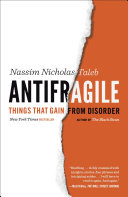
Antifragility is a concept introduced by Nassim Nicholas Taleb that goes beyond resilience or robustness. While something robust can withstand shocks and remain the same, and something fragile breaks under stress, antifragile entities actually benefit from volatility, uncertainty, and disorder. They thrive and grow when exposed to stressors, challenges, and chaos. This idea is pivotal in understanding how certain systems, businesses, and individuals can harness the power of randomness and unpredictability to improve and evolve. Taleb uses various examples from nature, economics, and personal experiences to illustrate how antifragile systems are superior to their fragile counterparts. For instance, biological evolution is antifragile; species adapt and evolve through challenges and changes in their environment. In contrast, many modern systems, particularly those designed for stability, can become fragile and susceptible to failure when faced with unexpected events. Understanding this concept encourages a shift in mindset, where one seeks opportunities in chaos rather than fearing it.
Continue readingTaleb proposes the Barbell Strategy as a practical approach to investing and decision-making that embodies antifragility. This strategy involves avoiding the middle ground and instead allocating resources into two extremes: very safe, low-risk investments and very high-risk, high-reward investments, while avoiding the mediocre middle. The rationale behind this approach is that it minimizes exposure to potential losses while maximizing the potential for substantial gains. By investing in both extremes, one can protect against downturns while still having the opportunity to benefit from significant upside potential. This strategy can be applied not only in finance but also in business and personal development. For example, in a career context, one might focus on developing both solid foundational skills (the safe end) and pursuing innovative, high-risk projects (the risky end). This dual approach allows individuals and organizations to be resilient to market fluctuations while positioning themselves to capitalize on unexpected opportunities.
Continue readingOne of the central themes in 'Antifragile' is the concept of 'skin in the game,' which refers to the idea that decision-makers should have a personal stake in the outcomes of their decisions. Taleb argues that systems and individuals without skin in the game are prone to making risky or irresponsible choices because they do not bear the consequences of their actions. This principle is particularly relevant in finance, politics, and business, where leaders often make decisions that affect others without facing the repercussions themselves. By ensuring that individuals have a personal investment in their decisions, accountability increases, leading to more prudent and thoughtful decision-making. The concept extends to various fields, emphasizing that true knowledge and competence come from experience and the willingness to take risks. This idea encourages a culture of responsibility and transparency, where individuals are incentivized to consider the long-term effects of their actions.
Continue readingTaleb emphasizes the significance of randomness and uncertainty in life and how they can be harnessed for growth. He posits that many people and systems attempt to eliminate uncertainty through prediction and control, but this often leads to fragility. Instead, embracing uncertainty allows for adaptability and innovation. Taleb discusses the limitations of traditional forecasting methods, arguing that they often fail to account for rare but impactful events, or 'black swans.' By accepting that the future is uncertain and that unexpected events will occur, individuals and organizations can prepare themselves to respond effectively. This involves creating systems that are flexible and capable of adapting to new information and changing circumstances. Embracing randomness can lead to serendipitous discoveries and opportunities, fostering a mindset that views challenges as chances for growth rather than threats.
Continue readingTaleb advocates for decentralization as a means to enhance antifragility. Centralized systems tend to be more vulnerable to systemic failures because they lack redundancy and flexibility. In contrast, decentralized systems, which distribute power and decision-making, are more resilient to shocks. This principle can be observed in nature, where ecosystems thrive through diversity and interconnectedness. Taleb argues that localism—focusing on local resources, knowledge, and communities—can create more sustainable and robust systems. By promoting local solutions and reducing dependency on large, centralized entities, communities can better withstand crises and adapt to changing conditions. This idea encourages a shift towards local economies, community engagement, and self-sufficiency, emphasizing the importance of grassroots initiatives in fostering resilience.
Continue readingVia negativa, or the principle of subtraction, is a key idea in 'Antifragile' that suggests that removing harmful elements can be more beneficial than adding new ones. Taleb argues that many systems and individuals can improve by eliminating the negative rather than trying to enhance the positive. For instance, in health, reducing stressors and toxins can lead to better well-being than simply trying to add more healthy habits. In business, cutting out inefficiencies and toxic practices can lead to greater success than merely adding new initiatives. This principle encourages a minimalist approach, focusing on what to eliminate rather than what to include. By adopting a via negativa mindset, individuals and organizations can streamline their processes, reduce complexity, and ultimately create more effective and resilient systems.
Continue readingTaleb applies the concept of antifragility to personal life, encouraging individuals to cultivate antifragile traits and behaviors. This involves embracing challenges, seeking out discomfort, and learning from failures. By exposing oneself to stressors and uncertainties, individuals can build resilience and adaptability. Taleb emphasizes the importance of lifelong learning and continuous improvement, suggesting that personal growth often comes from navigating adversity. He also highlights the value of community and relationships in fostering antifragility, as strong social networks can provide support during difficult times. By adopting an antifragile mindset in personal life, individuals can better navigate the complexities and uncertainties of life, ultimately leading to greater fulfillment and success.
Continue readingThe reading time for Antifragile depends on the reader's pace. However, this concise book summary covers the 7 key ideas from Antifragile, allowing you to quickly understand the main concepts, insights, and practical applications in around 24 min.
Antifragile is definitely worth reading. The book covers essential topics including Antifragility Defined, The Barbell Strategy, The Importance of Skin in the Game, providing practical insights and actionable advice. Whether you read the full book or our concise summary, Antifragile delivers valuable knowledge that can help you improve your understanding and apply these concepts in your personal or professional life.
Antifragile was written by Nassim Nicholas Taleb.
If you enjoyed Antifragile by Nassim Nicholas Taleb and want to explore similar topics or deepen your understanding, we highly recommend these related book summaries:
These books cover related themes, complementary concepts, and will help you build upon the knowledge gained from Antifragile. Each of these summaries provides concise insights that can further enhance your understanding and practical application of the ideas presented in Antifragile.